
Strategic AssessmentProcess OptimizationVCM Tactical Overlay
Tactical Overlay
A rules-based approach to reducing exposure when markets turn.

The idea

The overlay is an equity strategy, not an insurance policy, though the objective is similar: participate in rising markets while attempting to limit the impact of falling ones.

Some strategies pursue this with options. This one uses a mathematical approach built on technical indicators to identify risk-on and risk-off conditions. That choice was deliberate. It keeps costs low and works at lower investment minimums than options-based approaches.

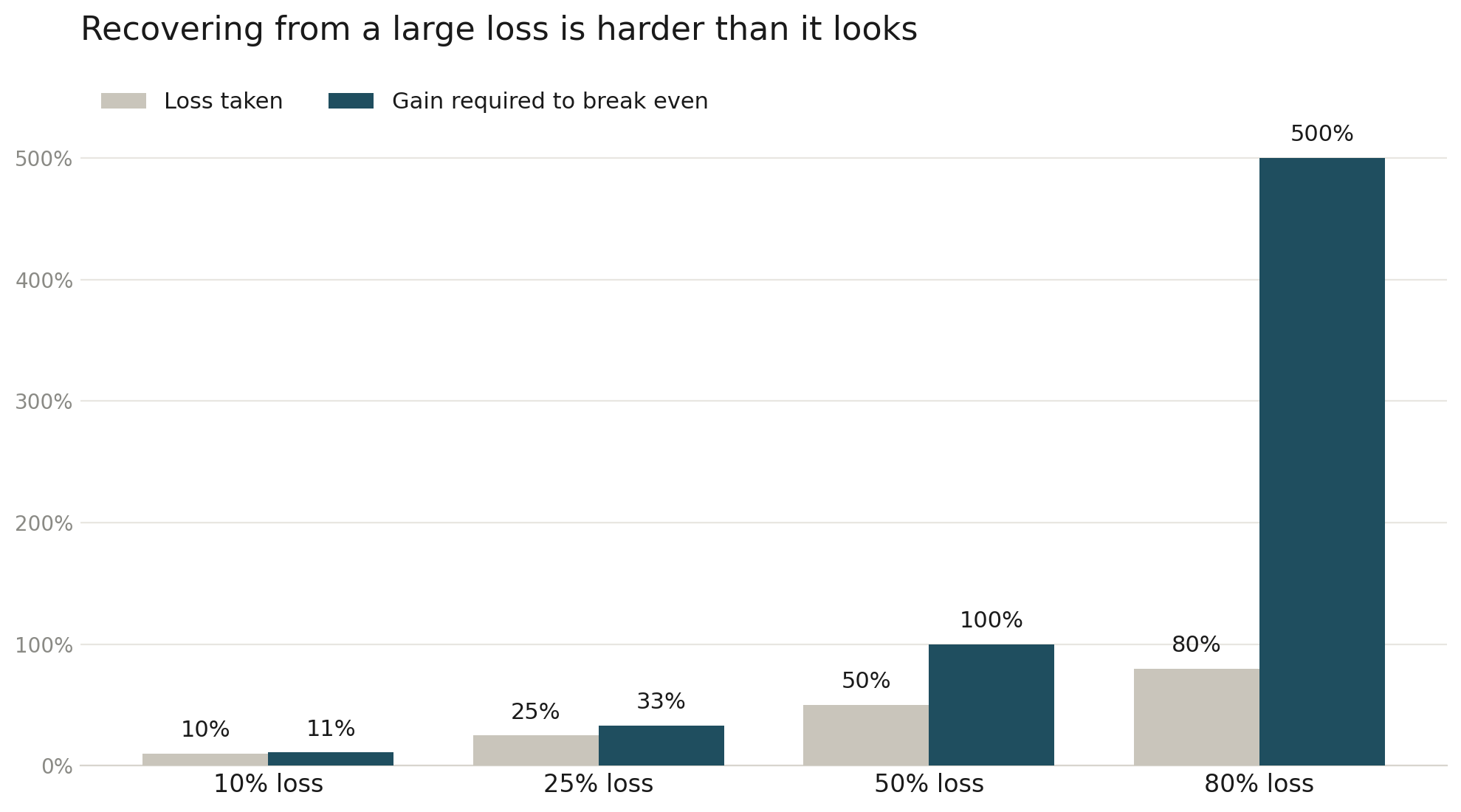
No strategy performs well in every environment. But attempting to limit large losses in bear markets can meaningfully affect how wealth compounds over time, and the reason has more to do with arithmetic than with markets.
Discovery
·
Analysis
·
Strategy Design
·
Discovery · Analysis · Strategy Design ·
How it works
The strategy has two components.
The technical overlay. A combination of mathematics, technical indicators, and the underlying data series. The overlay seeks to identify inflection points and triggers the portfolio's risk-on or risk-off posture accordingly.
The underlying portfolio. A low-cost ETF with exposure to a specific asset class or style, or a strategic strategy run by a third-party money manager.
Risk-on. The strategy holds the underlying ETF, or follows the allocation recommendations of the third-party manager's strategic strategy.
Risk-off. The strategy moves into the Barclays Aggregate Bond Index (AGG) or Treasuries.
Who it fits
Investors who want equity participation but have limited tolerance for a deep drawdown, particularly those close enough to retirement that recovery time is a real constraint.